Best Oil for Dosa: Which One Gives You Crispy, Perfect Dosas Every Time
Discover the best oil for dosa to get crispy, golden results every time. Learn why groundnut and coconut oils work best, what to avoid, and how to use them properly.
When you're making dosa, the coconut oil, a traditional cooking fat used across South India for its rich flavor and high smoke point. Also known as tender coconut oil, it's not just a substitute—it's the secret behind that golden, crackling crust that makes dosa unforgettable. Many people try sunflower or vegetable oil because they're cheaper or more available, but they miss the real taste. Coconut oil doesn't just fry—it adds a subtle sweetness and nutty depth that clings to the batter and lifts the whole dish.
Why does this matter? Because dosa isn’t just a pancake. It’s a fermented rice-and-lentil crepe that needs the right fat to crisp up without burning. Coconut oil has a smoke point around 350°F, perfect for medium-high heat on a tawa. It also stays stable longer than lighter oils, so your dosa stays crisp even after it’s off the stove. And unlike butter or ghee, which can burn quickly, coconut oil lets you spread the batter thin without turning the edges black. This is why grandmas in Kerala and Tamil Nadu swear by it—and why every street vendor in Mysore or Chennai uses it too.
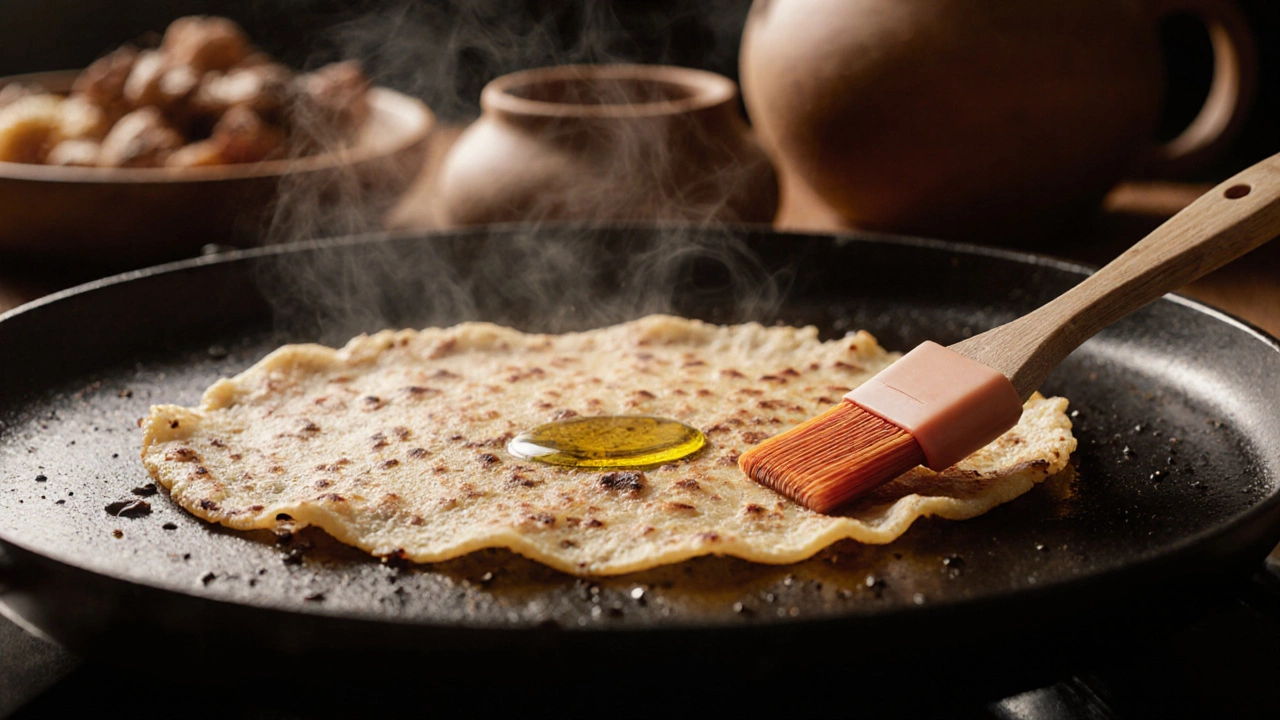
It’s not just about flavor. Coconut oil helps the batter release cleanly from the pan, which is huge when you’re making 10 dosas in a row. If you’ve ever struggled with sticking or tearing, it’s probably not your tawa—it’s your oil. You don’t need to deep-fry dosa. Just a light brush or drizzle, warmed first, is enough. And yes, you can use refined coconut oil if you want the flavor milder, but unrefined (virgin) gives you that unmistakable coconut aroma that makes the whole kitchen smell like a South Indian morning.
Some people ask, "Can I use olive oil?" or "What about ghee?" Sure, you can—but you’ll get a different dish. Olive oil has a grassy taste that fights with the fermentation. Ghee adds richness but burns faster and makes dosa greasy, not crisp. Coconut oil? It’s the only one that balances everything: crispness, aroma, release, and flavor. It’s the oil that’s been used for centuries because it just works.
You’ll find this in nearly every dosa recipe from Karnataka to Kerala. Even the batter recipes in our collection—like the one on dosa batter fermentation—assume you’re using coconut oil. It’s not an option; it’s part of the recipe. If you skip it, you’re not just changing the oil—you’re changing the experience.
So if you’ve been wondering why your dosa doesn’t taste like the ones you had in India, start here. Heat the oil. Wait for it to shimmer. Pour the batter. Watch it bubble and crisp. That’s the real magic. And in the posts below, you’ll find exactly how to use it—plus fixes for common mistakes, alternatives if you’re out, and even how to store it right so it never goes rancid.
Discover the best oil for dosa to get crispy, golden results every time. Learn why groundnut and coconut oils work best, what to avoid, and how to use them properly.