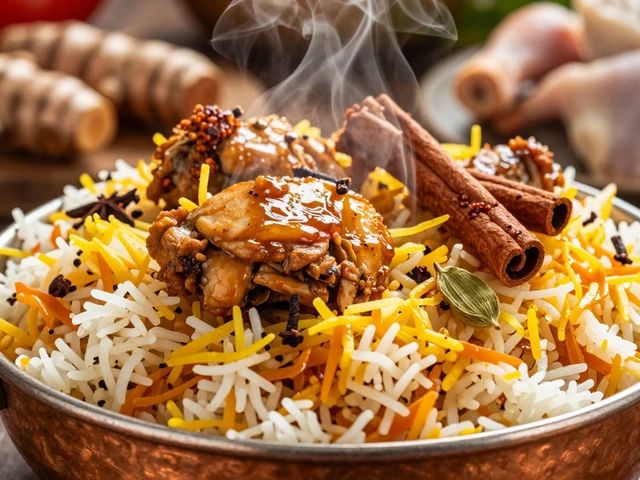
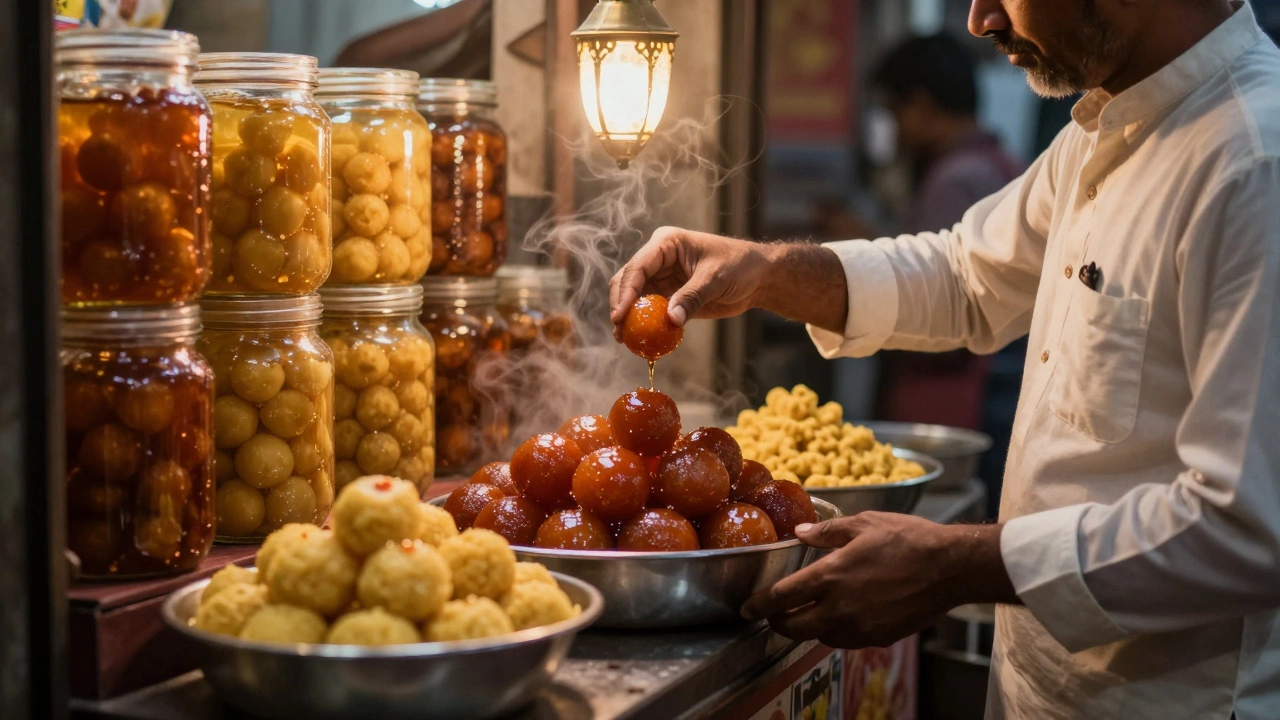
When you bite into a warm, sticky jalebi or a rich gulab jamun, you’re not just tasting sugar-you’re tasting centuries of tradition. Indian sweets don’t rely on plain white sugar like many Western desserts. Instead, they use natural, locally sourced sweeteners that give each treat its unique depth, aroma, and texture. If you’ve ever wondered why Indian sweets taste different from other desserts, the answer lies in what they’re sweetened with.
Jaggery: The Heart of Traditional Indian Sweets
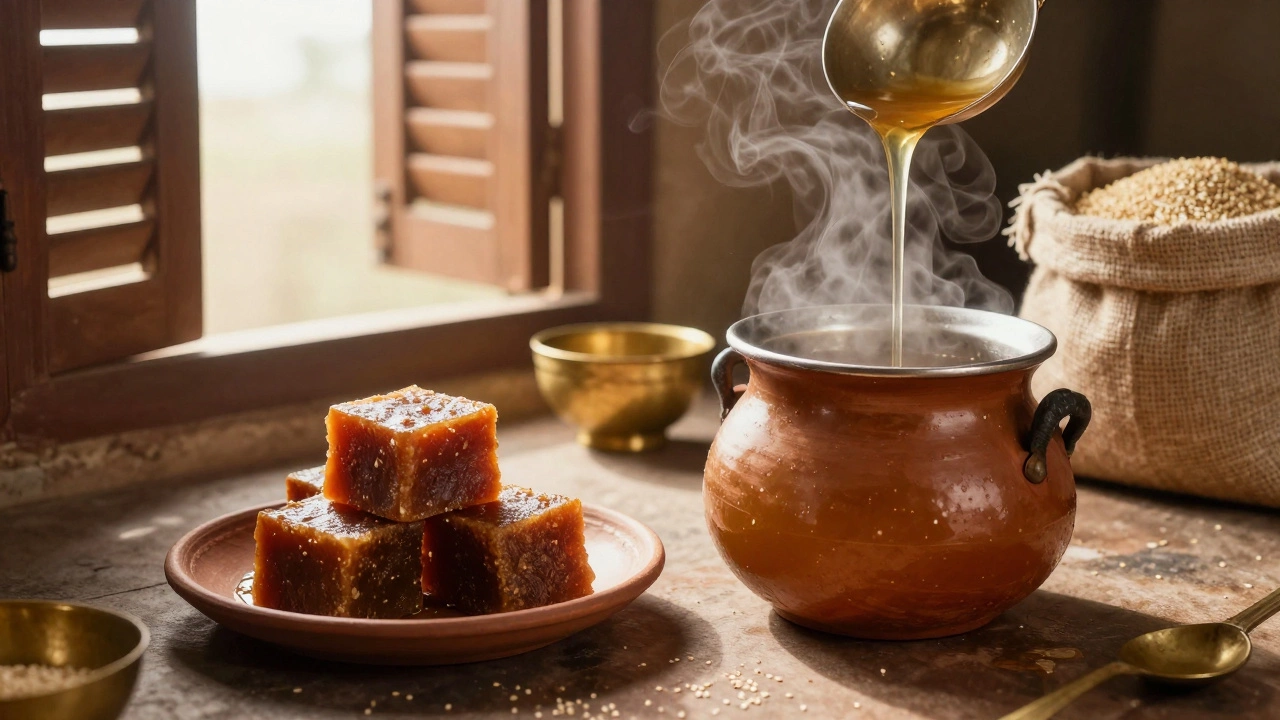
Jaggery, called gur in Hindi and vellam in Tamil, is the most common sweetener in rural and traditional Indian households. Made by boiling raw sugarcane juice until it thickens and solidifies, jaggery retains molasses and minerals like iron, magnesium, and potassium. Unlike refined white sugar, it has a deep caramel-like flavor with earthy, almost smoky notes.
You’ll find jaggery in ladoo, payasam, chikki, and even savory-spiced snacks like chakli in parts of Maharashtra and Karnataka. In South India, jaggery is often mixed with sesame seeds or coconut to make crunchy, nutrient-dense sweets that are offered during festivals like Pongal and Sankranti. Its unrefined nature means it doesn’t crystallize the same way sugar does-giving sweets a softer, chewier texture.
White Sugar: The Modern Standard
While jaggery dominates rural kitchens, refined white sugar has become the default in urban bakeries and commercial sweet shops. It’s cheaper, easier to measure, and gives a clean, bright sweetness that works well in high-volume production. Most packaged barfi, rasgulla, and peda sold in cities today use white sugar.
But even here, there’s a twist. Many traditional recipes still call for sugar that’s been slow-cooked into a syrup called shakkar ka sharbat. This syrup is boiled to specific stages-thread, soft ball, hard ball-just like in candy-making. The consistency determines the final texture of the sweet. For example, gulab jamun dough is soaked in a sugar syrup that’s boiled to the thread stage so it soaks in evenly without turning mushy.
Milk-Based Sweeteners: Khoya and Condensed Milk
Some Indian sweets don’t rely on cane-based sweeteners at all. Instead, they use milk solids. Khoya (also called mawa) is milk that’s been simmered for hours until most of the water evaporates, leaving behind a dense, creamy paste. It’s naturally sweet from lactose and forms the base of peda, kheer, and kalakand.
In modern kitchens, condensed milk has replaced khoya in many recipes because it’s faster and more consistent. You’ll find it in no-bake rasgulla variations, barfi, and even in fusion desserts like condensed milk kulfi. While it’s not a traditional ingredient, it’s now so common that many home cooks don’t think twice about using it.
Honey and Date Syrup: Rising Alternatives
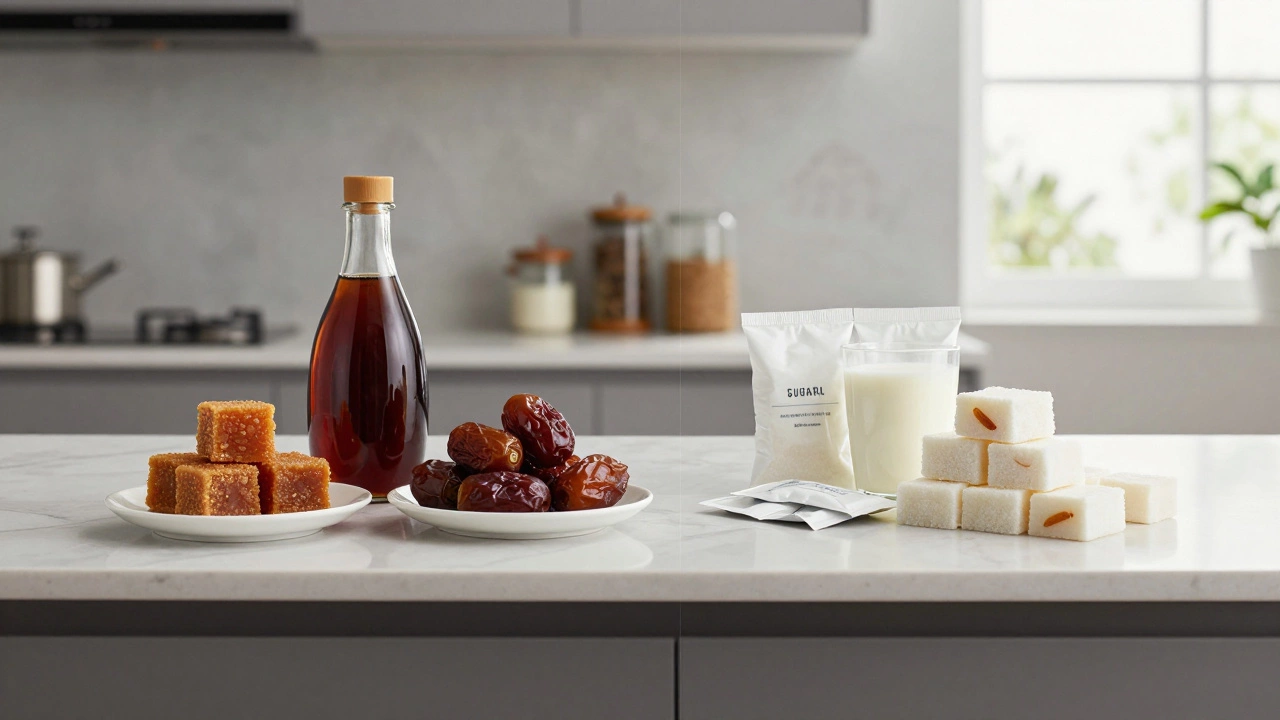
As health trends shift, some artisanal sweet makers and organic brands are turning back to ancient alternatives. Honey, especially from local wildflowers, is being used in place of sugar in ladoo and chikki for customers seeking unprocessed options. Date syrup, made by boiling and straining dates, is gaining traction in urban health food stores for its low glycemic index and rich flavor.
These aren’t replacements for tradition-they’re new interpretations. In Kerala, some temples still use honey in temple offerings, and in Rajasthan, date-based sweets are part of desert community rituals. But outside those contexts, they’re still niche. Most people still reach for jaggery or sugar.
Why These Sweeteners Matter Beyond Taste
The choice of sweetener isn’t just about flavor-it’s tied to culture, season, and even religion. In Hindu traditions, jaggery is considered auspicious and is often eaten with sesame during Makar Sankranti to symbolize sweetness in the coming year. In Muslim communities, sugar syrup is essential for festive sheer khurma served during Eid. In Sikh households, karah prasad is always made with jaggery or sugar, never artificial sweeteners.
There’s also a practical side. Jaggery doesn’t spoil easily and can be stored for months without refrigeration. In villages without consistent electricity, that’s a huge advantage. White sugar, on the other hand, is a product of industrial supply chains. It’s reliable, but it’s also disconnected from the land.
What You’ll Find in a Typical Indian Sweet Shop
If you walk into a traditional mithai shop in Varanasi, Lucknow, or Madurai, you’ll see jars of jaggery blocks, sacks of raw sugar, tubs of khoya, and bottles of sugar syrup. The shopkeeper will ask you if you want your rasgulla in light syrup or heavy syrup-meaning the sugar concentration. They won’t ask if you want artificial sweeteners because those simply aren’t part of the culture.
Even in metro cities, the best sweet shops still use jaggery for their signature items. For example, the famous Chennai jalebi uses jaggery syrup, not white sugar, to achieve its signature deep amber color and molasses finish. In contrast, chain stores and packaged sweets use white sugar because it’s cheaper and gives a uniform look.
Can You Substitute One for Another?
You can swap jaggery for sugar in most recipes, but the result will change. Jaggery adds moisture and a darker color, so your barfi might turn out softer and browner. If you use honey, the texture becomes sticky and the flavor more floral. Condensed milk will make sweets richer but also denser.
Here’s a simple rule: if the recipe calls for jaggery and you use white sugar, you’ll lose depth. If you use jaggery in a recipe designed for sugar, you might need to reduce the liquid slightly because jaggery contains more moisture.
There’s no single ‘right’ sweetener. Each brings something different. That’s why Indian sweets aren’t just desserts-they’re a reflection of geography, season, and heritage.
What’s the Most Common Sweetener in Indian Sweets Today?
It depends on where you are. In homes across Uttar Pradesh, Bihar, and Madhya Pradesh, jaggery is still king. In cities like Delhi and Bangalore, white sugar dominates. But if you want the authentic taste-the one passed down through generations-you need jaggery. It’s not just a sweetener. It’s the soul of the sweet.
Is jaggery healthier than white sugar?
Jaggery contains trace minerals like iron and magnesium because it’s unrefined, but it’s still mostly sucrose. It has slightly fewer calories per gram than white sugar, but not enough to make it a health food. The real benefit is flavor and tradition-not nutrition.
Can I use maple syrup instead of jaggery in Indian sweets?
You can, but it will change the flavor profile dramatically. Maple syrup has a distinct woody sweetness that doesn’t match the earthy depth of jaggery. It might work in fusion desserts, but traditional recipes will taste off.
Why do some Indian sweets use milk instead of sugar?
Milk solids like khoya contain natural lactose, which is sweet. When milk is slowly reduced, the sugars concentrate, creating a rich, creamy sweetness without adding any external sugar. This method is especially common in North Indian sweets like peda and kalakand.
Is artificial sweetener used in Indian sweets?
Almost never in traditional or home-made sweets. Artificial sweeteners don’t caramelize, don’t provide texture, and lack the depth needed for authentic flavor. You might find them in diet versions sold in pharmacies, but not in mithai shops or during festivals.
Where can I buy authentic jaggery outside India?
Look for Indian grocery stores or online retailers that specialize in South Asian ingredients. Choose blocks labeled as ‘unrefined’ or ‘cold-pressed’ jaggery. Avoid powdered versions-they’re often mixed with white sugar. Brands like Sri Sri Tattva or Pure & Simple are reliable.