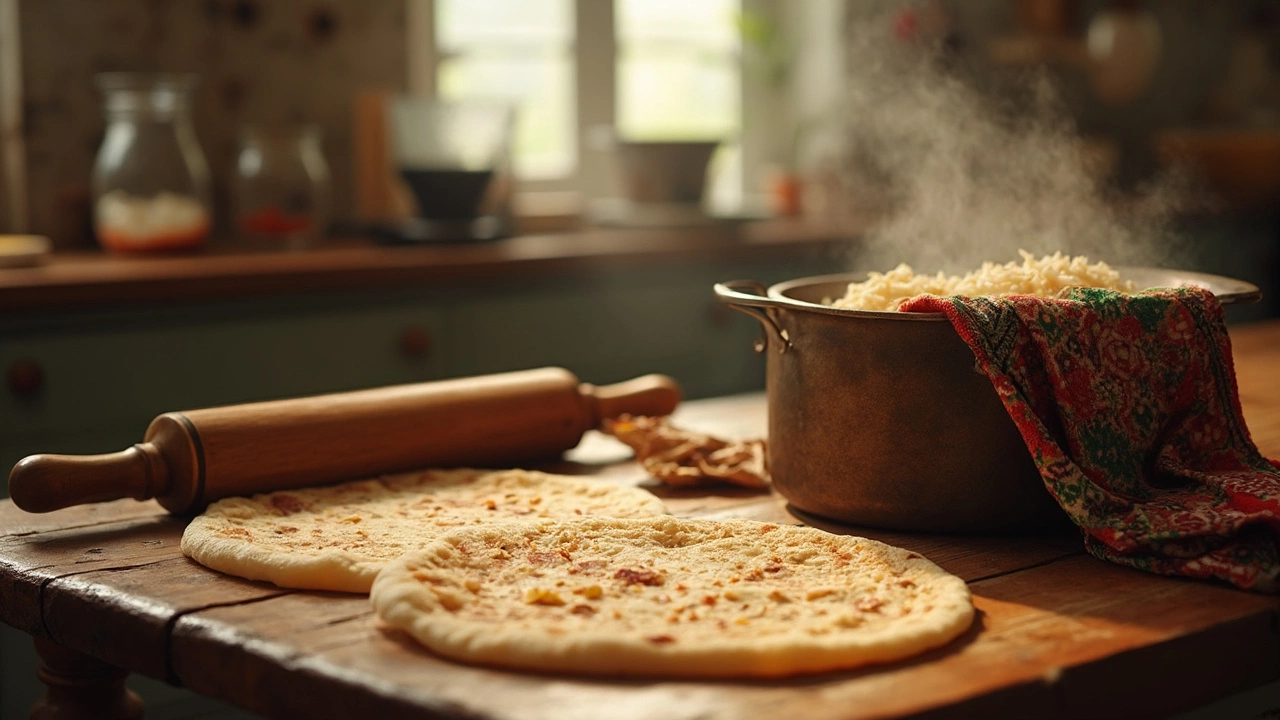
Soft Roti: How to Make Perfect, Puffy Indian Flatbread Every Time
When you pull a warm soft roti, a simple, unleavened Indian flatbread made from whole wheat flour, water, and salt. Also known as chapati, it's the everyday bread that holds together dal, curry, or just ghee in homes across India. It shouldn’t be tough, dry, or flat. A true soft roti puffs up like a balloon over heat, then gives slightly when you press it—just enough to hold your favorite curry without tearing. If yours doesn’t do that, it’s not about the flour or the tawa. It’s about the technique.
The difference between a hard, rubbery roti and one that’s pillowy soft comes down to three things: dough hydration, resting time, and rolling pressure. Too little water? It cracks. Too much? It sticks and tears. Letting the dough rest for at least 30 minutes lets the gluten relax so it stretches instead of snaps. And when you roll it? Don’t press hard. Let the roller glide. Pressure creates dense layers. Gentle pressure creates air pockets that turn into those beautiful puffs. The heat on your tawa matters too—it needs to be hot enough to set the surface fast, but not so hot it burns before the inside expands.
Related to roti shape, the round form isn’t tradition—it’s physics. A circle cooks evenly, traps steam inside, and puffs uniformly. Square or oval rotis? They dry out on the edges before the center puffs. And if you’ve ever wondered why naan, a leavened, oven-baked bread often served alongside roti. Also known as tandoori bread, it’s softer because it’s made with yeast and milk is fluffier than roti, that’s the answer: yeast and fat. Roti doesn’t need them. It’s meant to be simple, healthy, and made daily. That’s why it’s the backbone of Indian meals.
You’ll find posts here that explain why roti must be round, how to fix dry dough, what temperature your tawa should be, and why skipping the resting step ruins everything. You’ll also see how soft roti compares to naan, paratha, and other Indian breads—not to replace them, but to understand what makes each one special. Whether you’re making roti for the first time or you’ve been at it for years and still get flat results, the fixes are simple. They’re just not always obvious. What follows isn’t a list of recipes. It’s a collection of real fixes, tested in home kitchens, from people who know what soft roti should feel like in their hands.