What Makes a Delicious Curry? Essential Elements & Proven Tips
Learn the core ingredients, spice blending, cooking techniques and common pitfalls that turn a basic stew into a delicious curry.
When you taste a well-made Indian dish, it doesn’t just hit your tongue—it flavor balance, the art of harmonizing spicy, sour, sweet, bitter, and umami elements in a single bite. This isn’t luck. It’s centuries of trial, error, and tradition built into every dal, curry, and chutney. You don’t need to add more spices to make food taste better. You need to make them work together. That’s what Indian cooking, a system of layered tastes that relies on timing, technique, and ingredient synergy is all about. Think of it like a band: if the drums are too loud, you can’t hear the melody. Too much chili? The cumin and turmeric vanish. Too much sugar? The tang of tamarind disappears.
Real flavor balance doesn’t come from following a recipe blindly. It comes from understanding how spice pairing, the intentional combination of whole and ground spices to create depth without heat overload works. Cumin and mustard seeds bloom in oil to release earthiness. Fenugreek adds bitterness that cuts through richness. Coriander seeds bring citrusy sweetness that cools down the heat. These aren’t random additions—they’re counterpoints. You see this in dishes like dal tadka, where fried cumin and curry leaves float on top of mild lentils, or in pani puri, where spicy water, sweet tamarind, and tangy mint dance in one bite. Even chutney, often seen as a side, is designed to reset your palate between bites of heavier food.
And it’s not just about spices. The taste harmony, the equilibrium between acidity, sweetness, salt, and fat that makes Indian food satisfying without being heavy is what keeps you coming back. Yogurt cools down tandoori chicken. Lemon juice lifts up fried snacks. Jaggery softens the bite of black mustard seeds. Even the texture matters—crispy dosa with soft coconut chutney, or creamy paneer against chewy rice in biryani. This is why you can’t just swap ingredients and expect the same result. A spoon of sugar can’t replace tamarind. Ghee can’t substitute for coconut oil in dosa. Each element has a role.
What you’ll find in these posts isn’t just recipes. It’s the hidden logic behind every Indian kitchen. You’ll learn why you shouldn’t rinse yogurt off tandoori chicken, how soaking dal changes digestion, why roti has to be round, and how to pick the healthiest curry without losing flavor. These aren’t tricks—they’re principles. And once you understand flavor balance, you’ll start tasting Indian food differently. You’ll notice when something’s off. And you’ll know how to fix it—without a single recipe.
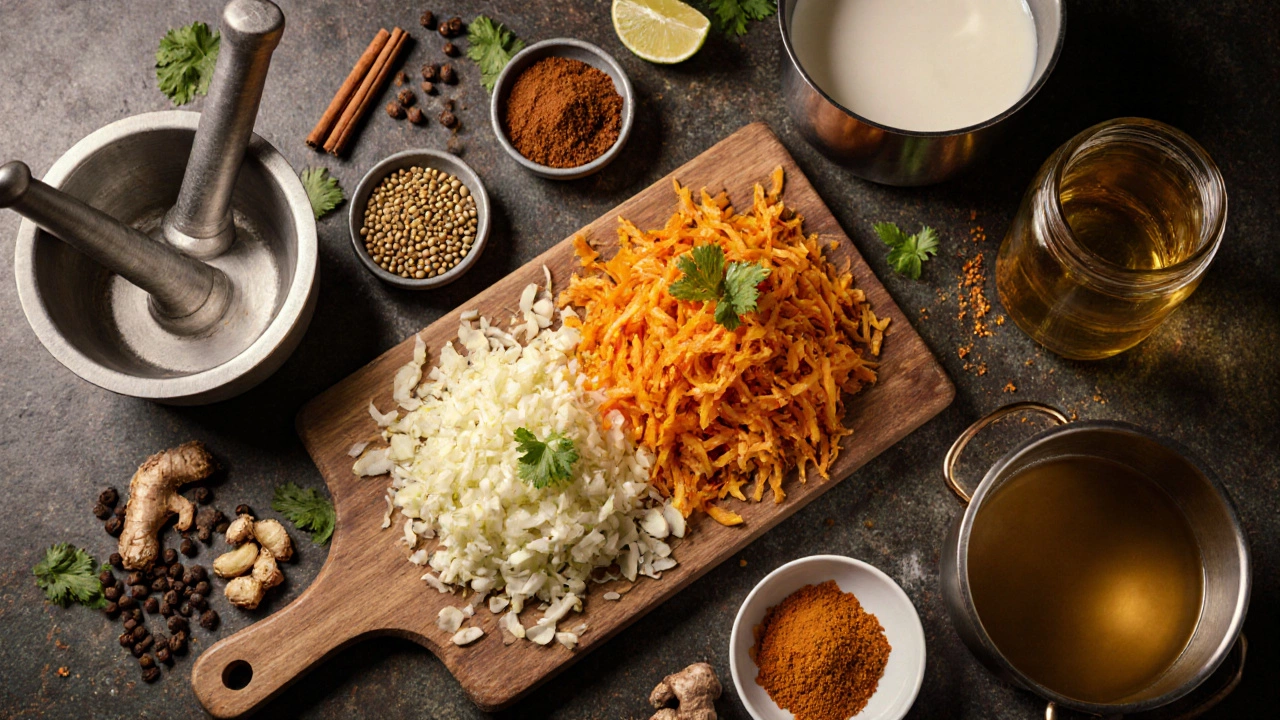
Learn the core ingredients, spice blending, cooking techniques and common pitfalls that turn a basic stew into a delicious curry.