How Long Should Dosa Batter Ferment? Exact Hours Explained
Learn the exact hours needed for dosa batter fermentation, how temperature and starter affect timing, and get troubleshooting tips for perfect dosas.
When you mix rice and urad dal into a batter and leave it overnight, something magical happens—dosa batter fermentation, the natural process where wild yeast and bacteria break down starches and sugars to create air bubbles, tanginess, and lift. Also known as natural leavening, it’s what turns a thick paste into a light, airy batter that puffs up on a hot griddle. Without it, your dosa turns flat, tough, and boring. It’s not just a step—it’s the foundation of every great dosa.
But fermentation isn’t magic. It’s science you can control. Temperature matters most. If your kitchen is below 25°C, your batter might take 12 hours or more. Above 30°C? It could be ready in 6. Humidity helps. A damp cloth over the bowl traps moisture and keeps the yeast happy. Salt slows it down—so add it after fermentation starts, not before. And don’t forget the urad dal ratio. Too little, and your batter won’t rise. Too much, and it gets slimy. The sweet spot? 1 part urad dal to 3 parts rice, soaked and ground just right.
What goes wrong? If your batter smells sour but doesn’t puff, it’s over-fermented—likely from too much heat or too long. If it smells like plain rice water, it didn’t ferment at all. That’s usually because the water was too cold, the dal wasn’t soaked long enough, or the container was sealed too tight. Fermentation needs air. A loosely covered bowl lets gases escape while keeping contaminants out. And never refrigerate your batter before it’s done—that kills the yeast. Once it’s ready, you can chill it to slow things down, but never before.
People in South India don’t guess when their batter’s ready. They test it. A spoonful dropped into water should float. The batter should look bubbly, smell slightly sweet and tangy, and have doubled in volume. That’s your cue. Mix it gently—don’t beat the air out. Add a pinch of salt. Pour. Cook. And if it doesn’t crisp up? The pan isn’t hot enough. Or you’re using the wrong oil. Groundnut oil works best. Coconut oil gives that authentic flavor. Olive oil? Skip it.
What you’ll find below are real, tested fixes from people who’ve been there. How to fix batter that didn’t ferment. Why your dosa sticks even when the pan is hot. What to do if you forgot to soak the dal. How to store batter for days without losing lift. And why some people add fenugreek seeds—it’s not just for flavor, it’s for fermentation speed. These aren’t theories. These are the tricks that work in homes across Tamil Nadu, Karnataka, and Kerala. No fluff. No guesswork. Just what happens when you get it right—and how to make sure you do, every single time.
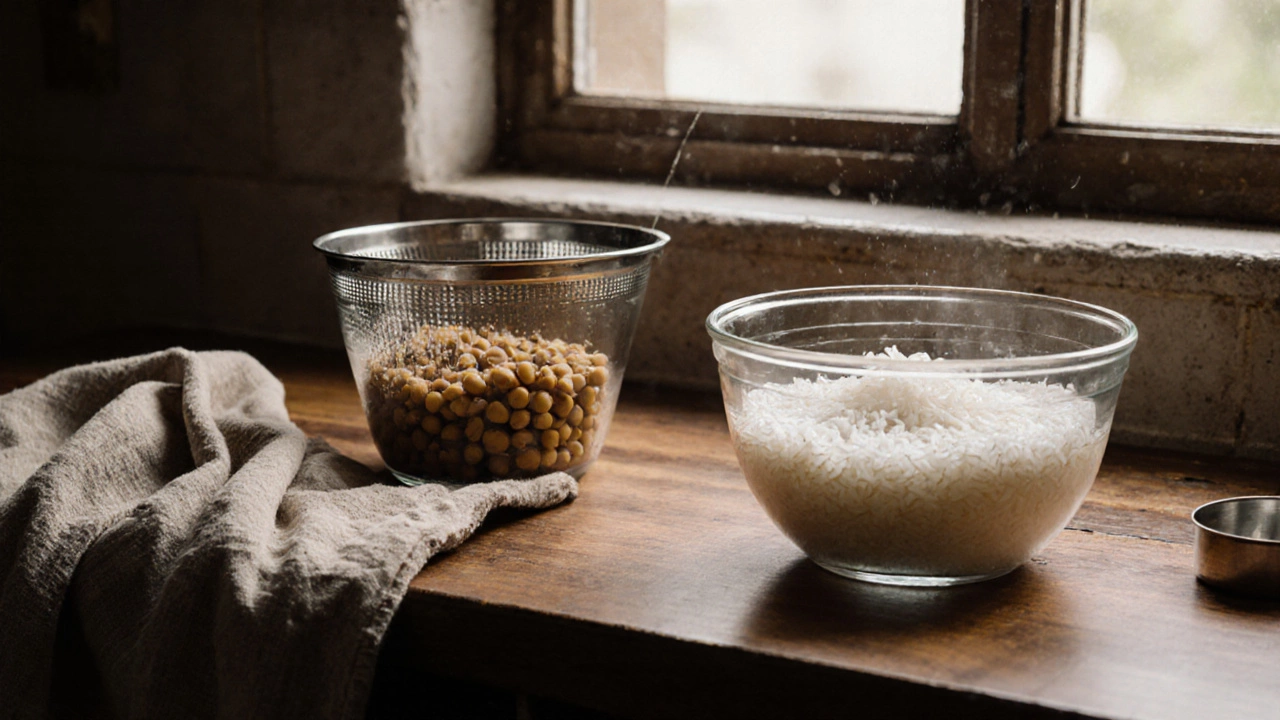
Learn the exact hours needed for dosa batter fermentation, how temperature and starter affect timing, and get troubleshooting tips for perfect dosas.