Dal Cooking: How to Make Perfect Lentils Every Time
When you think of dal cooking, the process of preparing lentils into a simple, nourishing dish central to Indian meals. Also known as lentil cooking, it's not just about boiling beans—it's about unlocking flavor, texture, and nutrition with minimal effort. This is the dish that feeds families across India, from rural villages to city apartments. It’s the first thing many learn to cook, and the one they return to when they need comfort, speed, or something that just works.
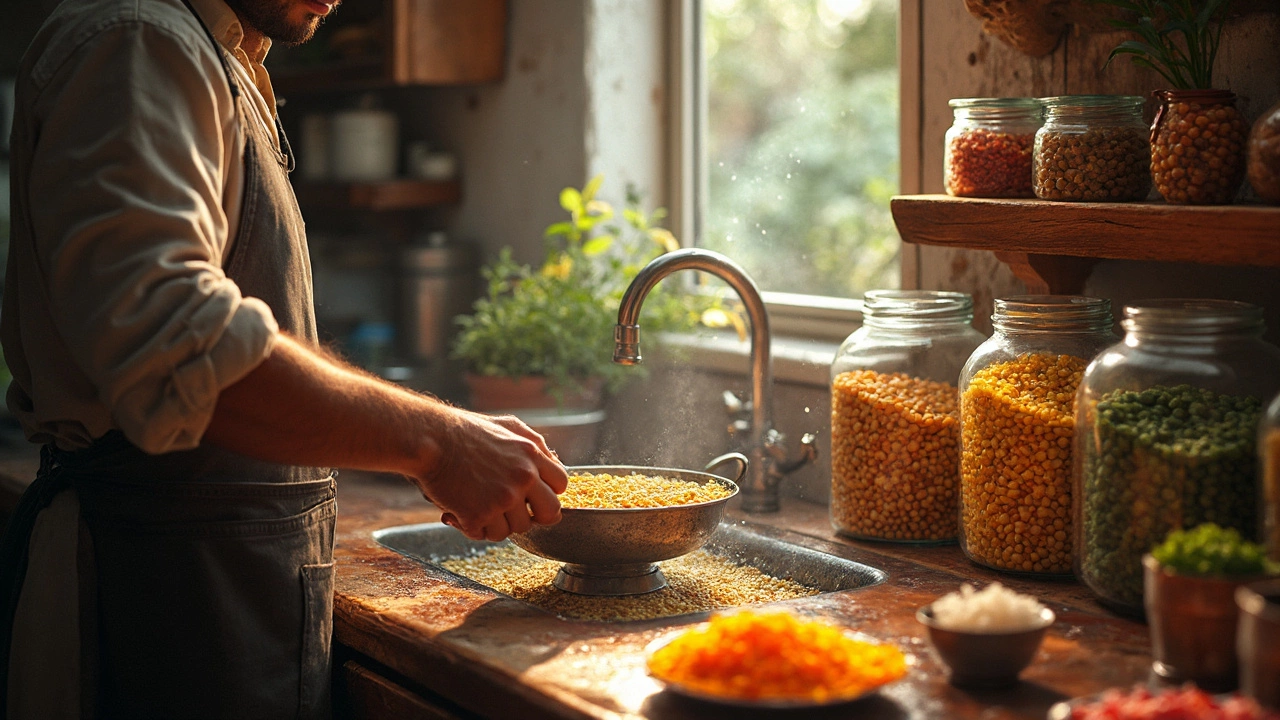
Dal cooking isn’t one thing. It includes dal tadka, a basic version where lentils are simmered and finished with fried spices, soaking dal, a step many skip but that cuts cooking time and prevents bloating, and even healthy Indian lentils, lentils cooked with little oil, no cream, and maximum protein. Each type has its own rhythm: masoor dal cooks fast, chana dal needs patience, urad dal turns creamy if you soak it right. Get the soaking time wrong, and you’ll end up with gritty lentils. Skip the tempering, and you’ll miss the soul of the dish.
The magic isn’t in fancy ingredients. It’s in the heat, the timing, and the way you treat the lentils before they hit the pot. You don’t need a pressure cooker. You don’t need a spice rack full of exotic powders. Just good lentils, water, a pinch of turmeric, and a little cumin fried in oil—that’s all it takes to make something deeply satisfying. People ask why Indian meals always include dal. It’s because it’s cheap, it’s filling, and it’s the one dish that never lets you down.
Below, you’ll find real guides from real kitchens—how to fix hard dal, why some lentils need soaking and others don’t, what oil works best for tadka, and how to make dal that even non-Indians call "the best thing I’ve ever eaten." No fluff. No theory. Just what works.